
The Fond du Lac Area Foundation partners with financial advisors, attorneys, and CPAs to help clients achieve their charitable goals while creating meaningful community impact.
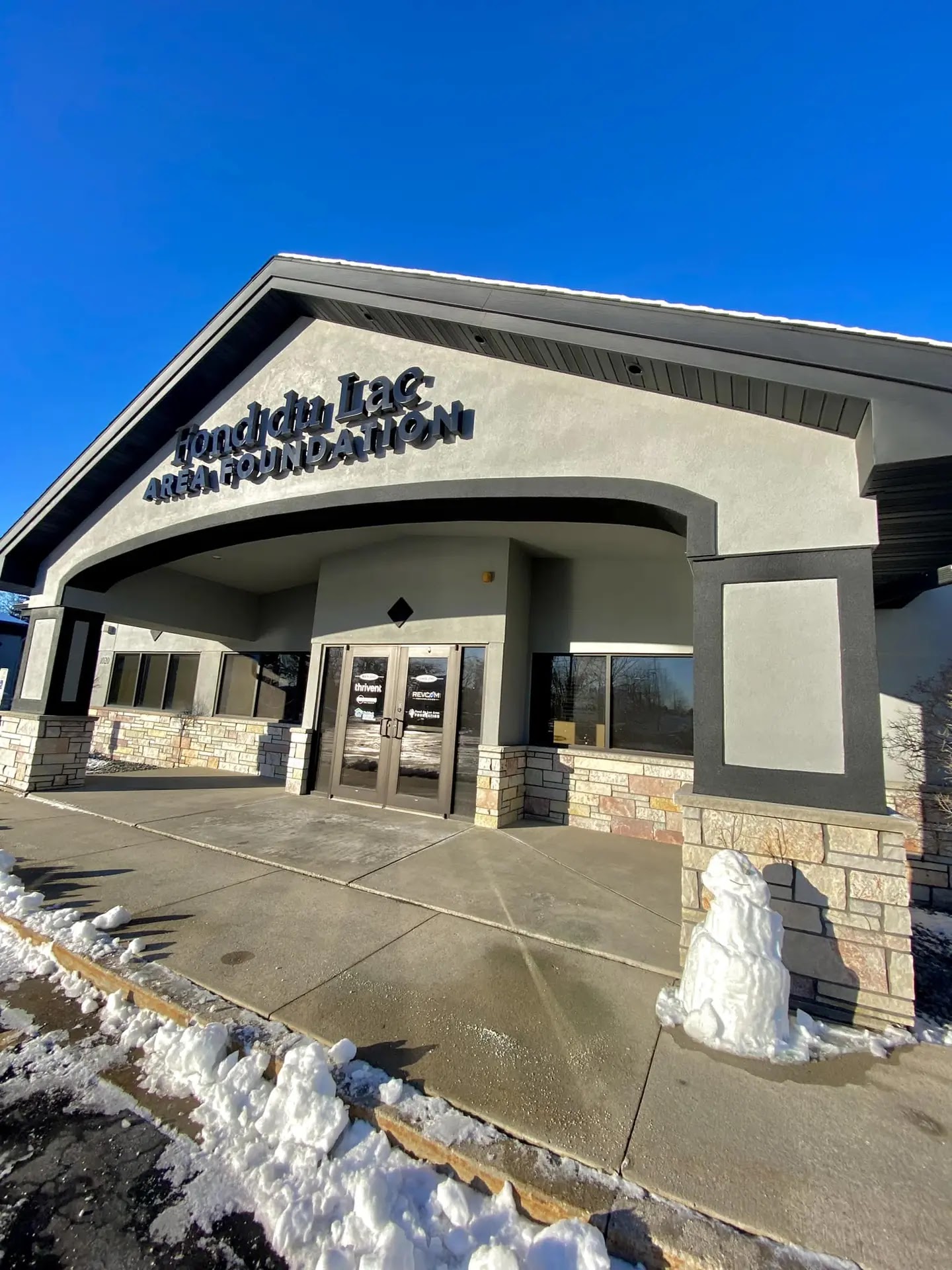
Through the Foundation, advisors can offer flexible charitable giving solutions backed by local knowledge, trusted stewardship, and personalized service.
We work alongside you and your clients throughout the process. The Foundation administers charitable funds, manages investments, oversees grant making, verifies charitable recipients, and handles the ongoing administration and reporting. Meanwhile, you remain the trusted advisor, helping guide your client's broader financial, legal, and philanthropic planning.
Our goal is to help identify the giving strategy that best serves each client. When another charitable vehicle may be a better fit, we're happy to have that conversation and help explore the available options.
This page covers the mechanics: fund types, the gifts the Foundation accepts, qualified charitable distributions, planned gifts, the steps for opening a fund, and who to call.
Professional advisors play an important role in helping clients achieve their charitable goals. The Fond du Lac Area Foundation serves as a local philanthropic partner, providing charitable expertise, fund administration, and community knowledge that can complement your planning process.
Together, we help clients create meaningful and lasting impact. Advisors remain the trusted relationship for their clients, while the Foundation provides the charitable infrastructure, grant making support, and stewardship that help bring philanthropic plans to life.
Our support for advisors and their clients generally falls into four key areas.
The Fond du Lac Area Foundation helps advisors and their clients establish charitable funds that reflect their values, goals, and long-term vision for giving. Clients can choose the name, purpose, and structure of their fund and, depending on the fund type, remain actively involved in grant making decisions.
The Foundation provides the stewardship and administrative support that allows charitable funds to operate smoothly, including fund agreements, investment oversight, grant administration, donor acknowledgments, recordkeeping, and reporting. Funds can be established during a client's lifetime or created through an estate plan, trust, beneficiary designation, or other planned giving arrangement.
Clients often know they want to make a difference but may be unsure where their gift can have the greatest impact. The Foundation's deep relationships throughout Fond du Lac County allow us to share insights on local needs, introduce clients to organizations doing meaningful work, and identify opportunities that align with their charitable interests.
We are here to support advisors by providing local knowledge and philanthropic expertise that can help inform conversations with clients and strengthen their charitable planning.
For many families, charitable giving is about more than making grants. It's an opportunity to share values, strengthen connections, and create a legacy that extends across generations.
The Foundation can help facilitate conversations around family philanthropy, provide information about community needs and opportunities, and support families as they develop a shared vision for giving. By helping family members learn about local organizations and community priorities, we can foster meaningful engagement in philanthropy for years to come.
Many charitable gifts involve assets beyond cash, including appreciated securities, retirement account assets, life insurance beneficiary designations, and qualified charitable distributions.
The Foundation can work closely with advisors and their clients to help facilitate these gifts and ensure they are handled efficiently and in accordance with applicable policies. We encourage advisors to review our gift acceptance guidelines early in the planning process so clients can make informed decisions and maximize the impact of their charitable giving.
Many charitable planning conversations begin by exploring a client's values, interests, and hopes for their community. The following questions can help advisors uncover the causes and outcomes that matter most to the people they serve:
These conversations often provide valuable insight into a client's philanthropic goals and can help identify charitable giving strategies that align with their vision. The fund options below offer several ways to turn those goals into meaningful community impact.
The Fond du Lac Area Foundation offers several types of charitable funds, each designed to help donors support the causes and communities they care about in a way that aligns with their philanthropic goals. While each fund operates differently, all are backed by the Foundation's stewardship, administration, and commitment to lasting community impact.
For advisors, the primary differences between fund types involve the client's level of involvement in grant making, the charitable goals they have identified, and whether the fund is eligible to receive a Qualified Charitable Distribution (QCD) from an individual retirement account.
In addition to selecting a fund type, donors will make two important decisions about how they want their philanthropy to work over time. The first is whether the fund will be endowed, creating a permanent source of charitable support, or structured to distribute its assets over a defined period. The second is determining how the fund should continue after the donor's lifetime, whether through successor advisors, ongoing charitable support for specific organizations or causes, or another legacy plan.
These decisions are documented in the fund agreement and can be tailored to reflect a donor's charitable vision, family priorities, and long-term goals.
Most charitable funds can be established with a minimum gift of $1,000.
See also Types of Funds and Endowed and Non-Endowed Funds.
The Foundation does not provide tax or legal advice. Please consult your advisor.
The Fond du Lac Area Foundation works with advisors and their clients to accept a variety of charitable gifts, making it possible to create meaningful community impact in ways that align with each donor's financial and philanthropic goals.
A qualified charitable distribution (QCD) is a transfer made directly by the custodian of a client’s individual retirement account (IRA) to a qualifying charity. The amount is excluded from the client’s taxable income rather than deducted, so it works for clients who take the standard deduction, and it counts toward the client’s required minimum distribution (RMD) for the year.
A client who has already given by QCD and wants to spread the charitable effect can direct the transfer to a designated fund that supports several organizations over a period of years, rather than to a single charity in a single year. That is the most common QCD structure the Foundation sees.
Full detail is on Qualified Charitable Distributions from Your IRA.
The Foundation does not provide tax or legal advice. Please consult your advisor.
Over the coming decades, an unprecedented amount of wealth will be passed from the baby boomer generation to their children, grandchildren, charitable organizations, and other beneficiaries. This transition presents a meaningful opportunity for individuals and families to consider the impact they want their assets to have, both on their loved ones and on the communities they care about.
For many donors, charitable giving is an important part of that legacy. Advisors can help clients explore how their estate plans might support the causes, organizations, and community priorities that have been important throughout their lives.
The Foundation offers several planned giving options, including bequests, beneficiary designations, and charitable remainder trusts. These gifts can support any of the Foundation's fund types and can be structured to create a lasting charitable legacy through an endowed fund.
In discussions about charitable planning, two additional strategies are often considered:
To learn more about the opportunities and conversations surrounding generational wealth transfer, visit The Great Wealth Transfer. Additional information about specific charitable planning tools can be found on our Planned Giving and Legacy Society pages.
Start the conversation with us. Before meeting with your client, connect with the Foundation to discuss their charitable goals, giving interests, and the assets they may be considering for a gift. We'll help explore whether a fund at the Foundation is the right fit and discuss other charitable options when appropriate.
Determine the best path forward. Our team will help identify the most appropriate fund type, outline any required documentation, and explain the timeline for establishing the fund. We strive to make the process straightforward and efficient for both advisors and clients.
Support your client conversation. We are happy to serve as a resource during client discussions when requested, or to work behind the scenes and allow you to lead the conversation. Our goal is to support the relationship you've built with your client.
Establish the fund and complete the gift. Once the fund agreement is finalized, the client can name the fund, define its charitable purpose, and complete the initial gift. The Foundation will provide any necessary instructions for transferring cash, securities, retirement assets, or other charitable gifts.
Ongoing stewardship and administration. After the fund is established, the Foundation provides ongoing administration, investment oversight, grant processing, donor stewardship, and reporting. Advisors remain an important part of the relationship, helping clients integrate their charitable goals into their broader financial and estate plans.
Step-by-step detail for specific instruments is on Charitable Planning for Your Clients.
The Fond du Lac Area Foundation values the trusted relationships advisors build with their clients. Our role is to complement your work by providing charitable expertise, fund administration, and local philanthropic knowledge that help clients achieve their giving goals.
Throughout the process, you remain the client's primary advisor, guiding their financial, legal, estate, and philanthropic planning. Once a fund is established, the Foundation provides ongoing stewardship, including investment management, grant administration, donor acknowledgments, reporting, and other administrative responsibilities.
When considering charitable giving options, our goal is to help identify the solution that best aligns with a client's needs and intentions. In some cases, another charitable vehicle may be a better fit, and we're committed to having that conversation openly and honestly. A fund at the Foundation can be particularly valuable for clients who want to support Fond du Lac County or one of our affiliate communities, establish a permanent charitable legacy, create a scholarship fund, or benefit from local philanthropic expertise and community knowledge.
After a fund is established, its assets are invested alongside the Foundation's pooled investment portfolio in accordance with the Foundation's investment policy. We are happy to share information about our investment approach, performance history, and stewardship practices so advisors and clients can make informed decisions with confidence.
The Fond du Lac Area Foundation values the trusted relationships advisors build with their clients. We work alongside financial advisors, attorneys, and CPAs by providing charitable expertise, fund administration, and local philanthropic knowledge. Advisors remain the primary relationship for their clients, while the Foundation provides stewardship and support that help bring charitable goals to life.
A fund at the Foundation can be particularly valuable for clients who want to support Fond du Lac County or one of our affiliate communities, establish a permanent charitable legacy, create a scholarship fund, or benefit from local philanthropic expertise and community knowledge. In some cases, the donor advised fund you already offer may be a better fit, and we are happy to have that conversation openly.
Many clients know they want to make a difference but are unsure where their philanthropy can have the greatest impact. Because the Foundation works closely with nonprofit organizations, donors, and community leaders throughout the region, we can help identify community needs, connect donors with organizations making a difference, and provide insight that supports thoughtful charitable decision-making.
No. Federal regulations do not allow donor advised funds, private foundations, or supporting organizations to receive Qualified Charitable Distributions. However, designated funds, field-of-interest funds, scholarship funds, unrestricted funds, and agency funds at the Foundation may be eligible. Our team is happy to help advisors and donors understand the available options and determine the best fit for their charitable goals.
Administrative fees support the stewardship and management of charitable funds, including investment oversight, grant administration, donor services, reporting, and other fund management responsibilities. Fees are assessed directly to the fund based on its balance. We encourage advisors to request the current fee schedule so clients have a clear understanding of how their fund will be administered.
Yes. Donors may choose to remain anonymous when recommending grants, either on a grant-by-grant basis or as an ongoing preference for their fund. We are happy to work with donors to honor their wishes while facilitating their charitable impact.
When a fund is established, donors have the opportunity to create a plan for how their charitable legacy will continue. They may name successor advisors, designate specific charitable beneficiaries, or create a lasting endowed fund that supports community needs well into the future. These plans are documented in the fund agreement and can be updated during the donor's lifetime as circumstances or priorities change.

Whether you're helping a client establish a charitable fund, explore planned giving options, or create a lasting legacy, our team is here to help. We are happy to answer questions, provide local philanthropic insight, and serve as a resource throughout the planning process.